Winter Nature Scavenger Hunt
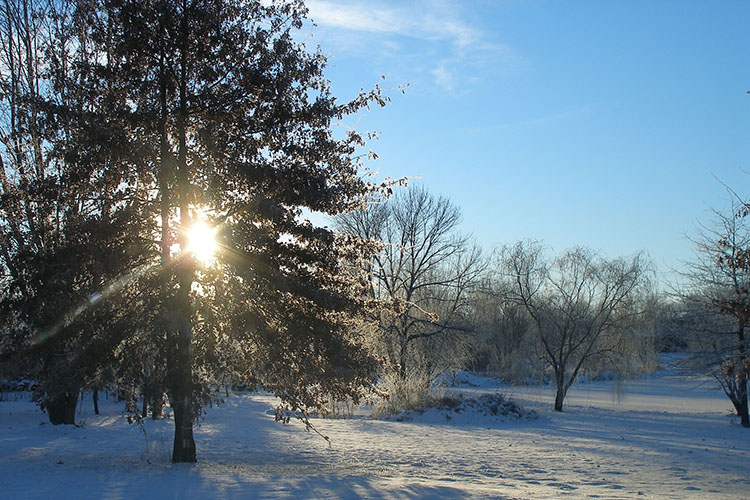
Get outdoors with a nature scavenger hunt at Gabis Arboretum at PNW. Build natural environment awareness and try to find nine natural winter objects. No matter how many objects you find, your participation helps with health and wellness.
Program participation is free. Arboretum admission fees apply for non-members.
Dates
December 21 to March 20, 2026
Beginner Scavenger Hunt
See if you can find the following natural objects at Gabis Arboretum! Need a hint on where to look? Just click the accordion to learn more.
Oak trees produce acorns. They can be found on the ground in the winter and provide food for wildlife. Owl and heron trail are good places to find acorns.
There are not that many rocks at the Arboretum. One location you can find some is at the adventure garden.
Look for ice on our ponds and hanging as icicles from trees and buildings. Frost would count as ice as well.
There are many animals home you can look for but the easiest to find would probably be a beaver lodge. On Heron trail there is a beaver lodge that you can walk to and touch. It looks like a large pile of sticks.
During much of the winter, the Arboretum is covered in snow. The best place to look for snow is in the shade, where there can still be snow left over from previous snowfalls even if all the snow in the sun has melted.
Moss can be found growing on rocks, on trees, and on the ground. Moss doesn’t only grow on the north facing side of the tree though so look all over. The intersection of owl and bluebird trail is a good place to spot some moss.
A mushroom is not the whole part of the fungus. A mushroom is just the fruiting body of the fungus. If you break open a rotting log and look inside there can be a white string-like substance. This is a fungus.
These trees usually stay green the whole winter. The most common conifer at Gabis is the white pine which can be found growing on the eastern end of bluebird trail.
There are many species of birds that call the Arboretum home in the winter. Stand still and remain silent while in the woodland and you will likely notice some birds around you in the trees.
Advanced Scavenger Hunt
See if you can find the following natural objects at Gabis Arboretum! Need a hint on where to look? Just click the accordion to learn more.
A marcescent tree is one that retains most of its leaves over the winter even though they are dead. Many oaks are marcescent, especially the shingle oak.
These nests can be found in the canopy of trees. They look like a large bundle of leaves. Owl and heron trail are good places to see these nests.
These trees are deciduous conifers meaning they lose their needles in the winter and grow them back in the spring. They can be found growing in water. The heron pond is a good place to see them.
Beavers are North Americas largest rodent. They can be found in heron pond and in the larger pond by windows to the wetland.
River birch has distinctive flaky white bark. There is a river birch growing near the first parking lot.
These have striking blood red stems. They can be found near the welcome garden.
Gabis Arboretum is home to many oaks, but the bur oak is probably the most common. Bur oaks can be found throughout the Arboretum, but the largest is the council oak on bluebird trail.
Unfortunately, there are many invasive species at Gabis, but our team is working hard to remove them. In the winter invasive plant species can still be seen and removed. An obvious one is oriental bittersweet which wraps its vine tightly around trees, killing them.
These small birds can be seed scaling trees while facing downwards. They are looking for insects hidden in cracks in the bark. They can be found in our woodland.
To request a disability-related accommodation, please contact the Office for Civil Rights at civilrights@pnw.edu or (219) 989-2163 five days prior to the event.
In accordance with Purdue policies, all persons have equal access to Purdue University’s educational programs, services and activities, without regard to race, religion, color, sex, age, national origin or ancestry, genetic information, marital status, parental status, sexual orientation, gender identity and expression, disability or status as a veteran. See Purdue’s Nondiscrimination Policy Statement. If you have any questions or concerns regarding these policies, please contact the Office for Civil Rights at civilrights@pnw.edu or (219) 989-2337.