Ernest Talarico
Assistant Professor of Practice in Anatomy & Physiology
Introduction
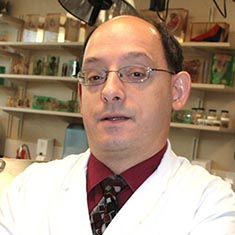
Ernest F. Talarico, Jr., serves in the appointments of Visiting Professor of Anatomy and Radiology, Medical Student Academic Adviser and Research Adviser at Tan Tao University School of Medicine in Long An, Vietnam.
Research Overview
Investigators have long been puzzled by the mystery of what initiates plaque formation and then the development of coronary artery disease (CAD). In the coronary arteries, we see many turns, curves and ostia where plaques seem to form, yet in the peripheral vessels we see plaques develop only near ostia.
In the heating and air conditioning industry (HVAC), we see similar damage to the inner coating of pipes – near bends, curves and pumps. In the present research, we have taken the principles and equations of fluid dynamics from the HVAC industry and applied them to the blood flow in coronary arteries and other vessels in the human body (i.e., biological pipes).
Using this approach and the novel technique of Dynamic Coronary Angiography (DAG), we can actively observe (unlike static conventional coronary angiography) patterns of blood flow in a patients arteries (i.e., coronary and peripheral) and predict where gas bubble implosion will occur within the lumen of the vessel resulting in a micro-jet wave that damages the internal lining of the vessel wall initiating the process of plaque formation and CAD.
The implosions are the direct result of turbulent blood flow patterns – the same turbulent fluid (or gas) flow patterns seen in the HVAC industry. The various patterns of turbulent flow and be seen and documented in patients via DAG.
Thus, the idea of treatment (i.e., medical/drugs; stent, bypass or balloon) is to restore the normal “anatomy” of the artery making the vessel environment more favorable for laminar flow pattern and not turbulent flow patterns. We are now applying AI and acoustic analysis to better understand blood (fluid) flow patterns in the pathogenesis and treatment of CAD.
In AI, we use U-Net and Convolutional Neural Network teach arterial and flow identification. Acoustics allows the development of “coronary action map” that identify in real-time compression and rarefaction antinodes, where severe and moderate lesion occur secondary to vibrational damage of turbulent flow patterns.
These investigations of CAD predominantly center on understanding the mechanisms underlying plaque formation, progression and regression. The introduction of DAG, AI and Acoustics for recording and interpreting coronary angiography has facilitated the identification of diverse flow patterns and arterial phenomena within coronary arteries.
These newly elucidated flow dynamics suggest that the formation and growth of coronary lesions are primarily attributed to disorganized flow or turbulence. Turbulent flow causes injury to the intima, initiating the development of small lesions and fostering their progression, particularly in the presence of abundant low-density lipoprotein (LDL) cholesterol molecules.
Uncontrolled hypertension exacerbates the repetitive impact of turbulent flow, increasing the likelihood of plaque rupture. This pathological mechanism is implicated in precipitating acute coronary syndrome, ST-elevation myocardial infarction, critical limb ischemia, transient ischemic attack, stroke and other related conditions.
The adoption of this innovative approach to recording and reviewing coronary dynamic flows, along with their clinical implications, has ushered in a new era of valuable insights and innovative applications for the diagnosis and medical, surgical and interventional management of patients with CAD.
Select Publications
Talarico, Jr., E.F., Nguyen T. (2021) “Challenges of the 21st Century: Part 1 – Diagnostic, Prognostic and Interventional Anatomy,” European Journal of Anatomy, 25(S1):1-7 (Invited Manuscript), DASH – Digital Access to Scholarship at Harvard Database.
Nguyen T., Chung D., Ngo L., Loc V.T., Ngo T., Hung P.N., Thinh C.V., Dzung H.T., Talarico, Jr., E.F., (2021) “Challenges of the 21st Century: Part 2 – Dynamic Angiography in the Investigation of Cavitation in Coronary Arteries: Standard Description of Coronary Lesions and Blood Flow,” European Journal of Anatomy, 25(S1):9-28 (Invited Manuscript), DASH – Digital Access to Scholarship at Harvard Database.
Talarico, Jr., E.F., Nguyen T., Hung P.N., Thinh C.V., Dzung H.T. (2021) “Challenges of the 21st Century: Part 3 – The Anatomical Risk Factors Which Predict Future Disaster,” European Journal of Anatomy, 25(S1):29-46 (Invited Manuscript), DASH – Digital Access to Scholarship at Harvard Database.
Nguyen T., Dzung H.T., Hung P.N., Tinh C.V., Talarico, Jr., E.F. (2021) “Challenges of the 21st Century: Part 4 – Interventional Anatomy: A Case-Based Discussion,” European Journal of Anatomy, 25(S1):47-57 (Invited Manuscript), DASH – Digital Access to Scholarship at Harvard Database.
Nguyen T., Vu L.T., Ngkuyen H.Q., Le T.N.H., Nguyen N.T., Nguyen T., Nguyen TH., Pharm T., Tran K., Nguyen H.T., Vo H.K., Bui N., Le T.C., Mihas I., Singh M., Talarico Jr. E., Zuin M., Rigatelli G., Nanjundappa A. Gibson M. (2023) “New Techniques of Recording and Interpretation of Dynamic Coronary Angiography,” TTU Journal of Biological Sciences, 2 (1):41-8, DASH – Digital Access to Scholarship at Harvard Database.
Research Profiles

Teaching Focus
- Human Anatomy
- Physiology
- Radiology
More About Ernest Talarico
He is a founding member of the medical advisory board and founder of the Center for Medical Education and Research at Nam Can Tho University Hospital in Can Tho, Việt Nam and the Director of the Southeast Asia Anatomy Project. Further, Professor Talarico serves as Professor of Practice in Anatomy & Physiology at Purdue University Northwest in Hammond, IN and is a senior research consultant in the Cardiovascular Research Laboratories at Methodist Hospital in Merrillville, IN.
His areas of research include the application of the principles of fluid dynamic/mechanics from the heating and air conditioning industry to human arterial blood flow patterns and lesion/plaque formation; molecular mechanisms for the genesis of polyorchids and dilated cardiomyopathy and testicular cancer.
Professor Talarico served as Associate Director of Medical Education, Course Director for Human Structure and a member of the graduate faculty at the Indiana University School of Medicine in Indianapolis, IN and as a consultant and lead prosector for the Anatomical Gift Association of Illinois in Chicago, IL.
Contact
(219) 989-2490
Office Location:
Hammond Campus, NILS 340C
Education
- Postdoctoral – Indiana University Northwest, School of Medicine
- Ph.D. – Anatomy & Cell Biology, Minor in Life Sciences, Indiana University Northwest, School of Medicine
- M.S. – Biological Sciences, Emphasis: Microbiology, Genetics and Molecular Biology, Purdue University Calumet
- B.S. – Biology, Illinois Institute of Technology
Areas of Expertise
- Anatomy
- Radiology
- Cardiology
- Cancer Biology
- Medical Education
Credentials, Accreditations & Awards
- Outstanding Faculty Teaching Award, 2024-25
- Outstanding Scholarship/Research Award, 2024-25
- Award for Outstanding and Innovative Program in Undergraduate and Continuing Medical Education, 2008
- Partnership Matters Award Recipient, 2008