PNW’s Study Away Program takes learning beyond the classroom
Alisha Weiler
Purdue University Northwest’s (PNW) Study Away Program offers students more than a change of scenery. It helps broaden perspectives, build confidence and create experiences that stay with students long after returning to campus.
From South Dakota to Nepal, Tennessee to Costa Rica and across Europe, PNW’s Study Away Program encourages students to step outside their comfort zones and experience new communities, cultures, ideas and ways of approaching everyday life.
Whether participating in an international or domestic program, students can benefit from expanded global and cultural perspectives, academic enrichment, experiential learning, personal growth, increased confidence, career development and networking opportunities with peers, faculty and professionals.
“Study Away programs prepare our students to work and succeed in an increasingly interconnected world,” says Ramesh Neupane, director of International Programs and Partnerships. “Our faculty and staff play an important role in creating these opportunities, sharing their expertise and helping students connect what they learn in the classroom with real-world experiences.”
A unique program
Many of PNW’s Study Away programs are faculty-led to ensure academic rigor, personalized guidance and interdisciplinary opportunities. An important aspect of the program is its integration with academic programs, ensuring that credits earned during Study Away experiences are applicable toward students’ degrees. Community engagement and service-learning opportunities provide practical, hands-on experiences that benefit local communities and foster a global mindset.
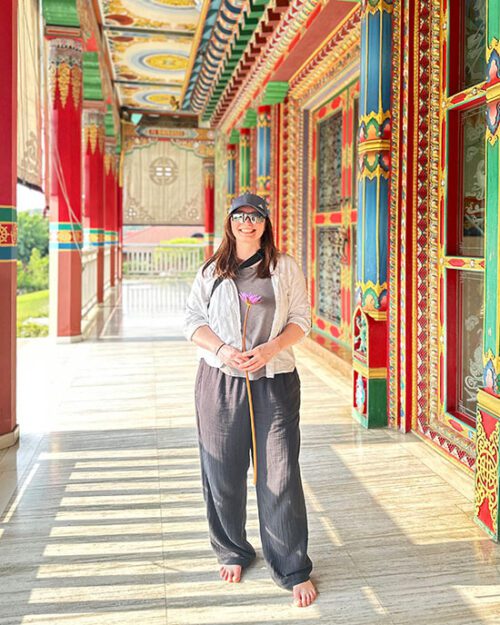
“The faculty and staff went above and beyond,” says Alisha Weiler, a fourth-year social work major who traveled to Nepal on a Study Away program in summer 2026. “They took time to listen to our needs at the pre-departure meetings and during the trip. Whether exchanging currency or recommending things on the menu, they helped us navigate different situations. I felt really supported during this experience.”
Hugo Garcia
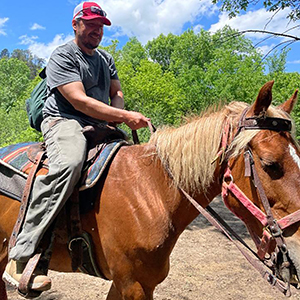
“The professors guiding the program were very knowledgeable,” says Hugo Garcia, a third-year mechanical engineering technology major and participant in the Pine Ridge Reservation program in South Dakota. “They had a great deal of knowledge about the location, people and culture and offered us some great advice before we even arrived on the reservation.”
Many study-away programs at PNW are open to all students, though some are specific to certain majors and have GPA requirements. One-on-one advising can help determine the best program fit for each student.
“At PNW, we are committed to making these experiences accessible to students, regardless of their background or financial circumstances,” says Neupane. “Our goal is to ensure that more PNW students have the opportunity to participate in these life-changing experiences and return with new knowledge, perspectives and experiences.”
PNW offers various scholarships and financial aid to make these opportunities accessible to all students. Programs are offered throughout the year, including short-term, semester and year-long exchanges.
For more information on PNW’s Study Away programs, visit pnw.edu/study-away.
Throughout the last year, PNW students have taken advantage of a variety of Study Away Programs offered by the university.
Finding a new perspective
Alisha Weiler
Fourth-year Social Work major
Study Away Program – Nepal
Alisha Weiler
For Alisha Weiler, a study away experience in Nepal offered more than just the opportunity to visit a new country. It changed how she thinks about relationships, culture, spirituality and her future career.
“It was a life-changing experience,” says the Michigan City, Indiana native. “The trajectory of my life will be forever changed.”
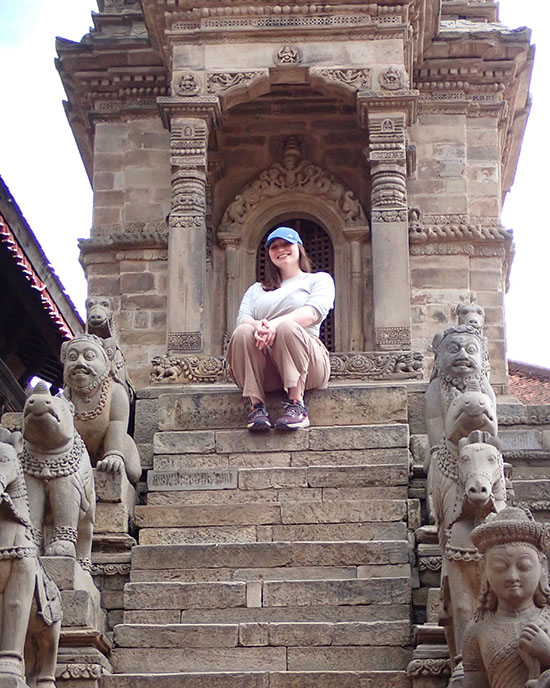
Weiler chose to travel to Nepal through PNW’s Study Away program during summer 2026 in part because of her interest in meeting new people, learning about new cultures and discovering the nuances of everyday life in different parts of the world. She was also drawn to the country’s striking geography, unique wildlife, ancient temples and traditions. Her experiences surpassed her expectations.
“Everywhere we went there were people actively praying at temples, lighting incense and meditating,” says Weiler. “It was incredible to see how intertwined religion and daily life were there.”
During the two-week experience, participants explored the country’s geography, culture and cuisine. They visited Kumari, Nepal’s living goddess and Swayambhunath, commonly known as the Monkey Temple. They also visited ancient temples, drove and hiked mountain paths and shared a meal with a Nepalese family.
As a social work major, Weiler noted that cultural competence is a core principle of the profession. Her experience in Nepal helped solidify her belief that “we’re all in this thing called life together.”
“What surprised me was how well all the religions get along. Hindu, Buddhist, Muslim and Christian communities all live and cooperate alongside each other – some even sharing places of worship,” she says. “I look forward to integrating those values and cooperative spirit into my work, education and social life.”
Alisha Weiler
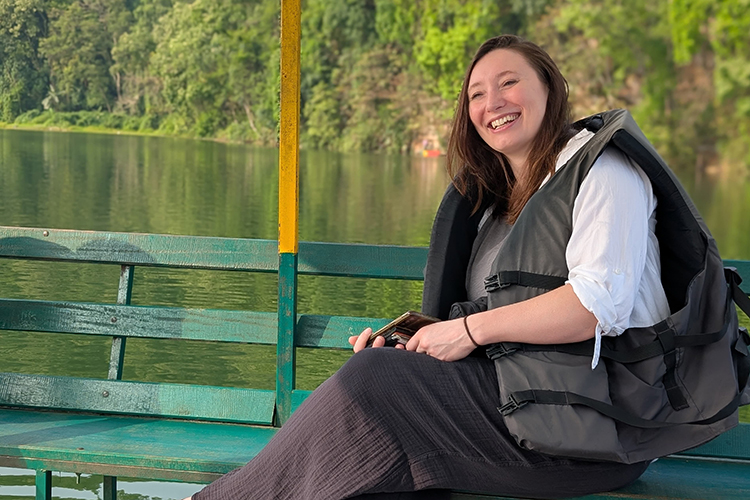
Weiler plans to pursue a Master of Social Work at PNW and eventually enter the field of clinical therapy. She sees her experience with the Study Away program in Nepal particularly relevant to her education and future career.
The experience opened the door to a possibility she had never previously considered, completing a social work internship in Nepal. After visiting an organization that supports people with intellectual and developmental disabilities, she began considering whether she might return as an intern during her master’s program.
The experience also helped her to think more about what it means to be a global citizen, including becoming more aware of how tourism can affect the environment.
Weiler returned from Nepal with lasting friendships, a broader perspective and new possibilities for her academic and professional future.
“I’ve started structuring my life differently,” she says. “I’ve slowed down and put more emphasis on my relationships.”
Viewing History through a Different Lens
Hugo Garcia
Third-year Mechanical Engineering Technology major
Study Away Program – Pine Ridge Reservation
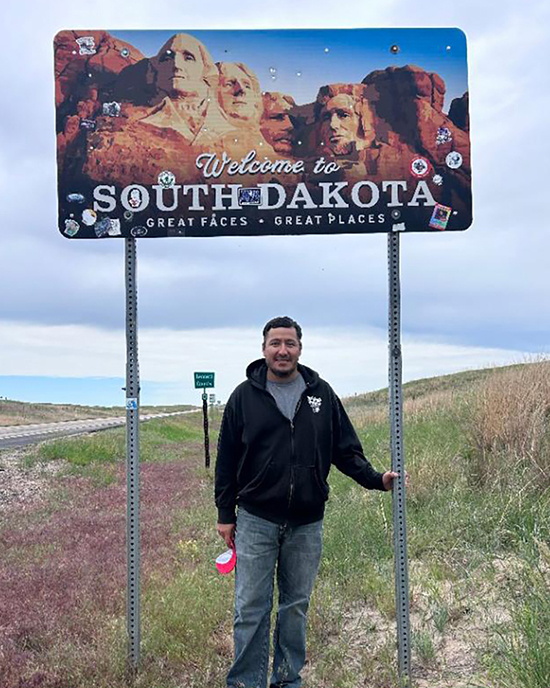
Hugo Garcia
For Hugo Garcia, a week-long study away program at the Pine Ridge Reservation in South Dakota during summer 2026 offered something a textbook or classroom could not, the opportunity to explore American history and culture firsthand.
Garcia, a third-year mechanical engineering technology major who hopes to pursue a career in manufacturing, robotics or a related field, chose the Pine Ridge program because of his interest in history and a desire to better understand perspectives that can sometimes be missing from traditional lessons.
“I’ve taken history classes on topics like the expansion west,” says Garcia. “I wanted to learn more about it firsthand and from different perspectives.”
The Pine Ridge Reservation program provided an immersive cultural educational experience focusing on local history, traditions, community perspectives and direct engagement with members of the Oglala Lakota Nation. Before traveling to South Dakota, students prepared for the trip through videos and Zoom meetings that introduced them to the history and contemporary challenges of the reservation.
“You can watch videos or read about it,” says Garcia. “But once you’re there and you’re seeing it with your own eyes, it just feels different.”
The group spent time visiting important historical sites, including Mount Rushmore, the Crazy Horse Memorial and Wounded Knee. At the All Nations Gathering Center, students stayed in bunkhouses and, in Garcia’s case, spent a night in a tipi. Their host, Dallas Chief Eagle, shared stories and perspectives with the group, helping students connect what they had studied before the trip with the experiences and voices of people connected to the community.
The experience was not without challenges. Garcia and his fellow students had to adjust to unfamiliar surroundings, including well water and a more rustic living environment. He also noticed differences in conversational patterns and social cues, learning that pauses in conversation did not necessarily mean discomfort.
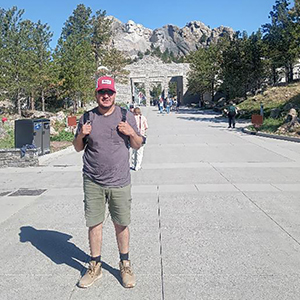
Hugo Garcia
Seeing the limited resources available to some reservation residents, including housing conditions and barriers to education and employment, put Garcia’s own educational journey into perspective.
“It makes you appreciate the things that you do have,” says Garcia.
The experience also helped Garcia to think differently about mechanical engineering technology and the responsibilities that come with a career in the field.
“Engineering decisions can affect communities and environments in ways that extend beyond technical considerations,” says Garcia. “Being more ethical in where I work or the projects I take on will definitely be a consideration for me.”
The study away experience also gave Garcia a greater understanding of how culture and personal background can shape the way people communicate and see the world.
“It helped me understand that everybody has a different background,” says Garcia. “Not just on an international level but also within the U.S. I realized that you have to stop and think about things from other people’s perspectives.”
Ultimately, the experience expanded Garcia’s world view, reinforced the importance of looking at history from multiple perspectives and helped his approach to understanding and working with those whose experiences may differ from his own.
“The Pine Ridge Reservation study away experience really enriched my life,” says Garcia.